Category: Executive Insights | Part 5 – Enterprise Architecture
Estimated Reading Time: 15–18 minutes
How organizations can connect strategic objectives, Enterprise Architecture, AI initiatives, and digital investments to measurable business outcomes.
Organizations continue to invest in digital platforms, artificial intelligence, application modernization, process automation, and enterprise-wide transformation programs.
These investments are often supported by ambitious strategies, detailed roadmaps, and significant organizational resources.
Yet one question remains difficult to answer:
How do we know whether transformation is actually delivering the business value we expected?
But successful delivery does not automatically mean successful transformation.
The real measure of success is whether these changes improve the organization’s ability to achieve its strategic objectives.
This includes stronger business capabilities, better operational performance, improved customer experiences, reduced risks, and more effective use of investments.
As discussed throughout Bizcon’s Transformation Collaboration series, Business Architecture and Enterprise Architecture provide the connections between strategy, business capabilities, processes, information, applications, and technology.
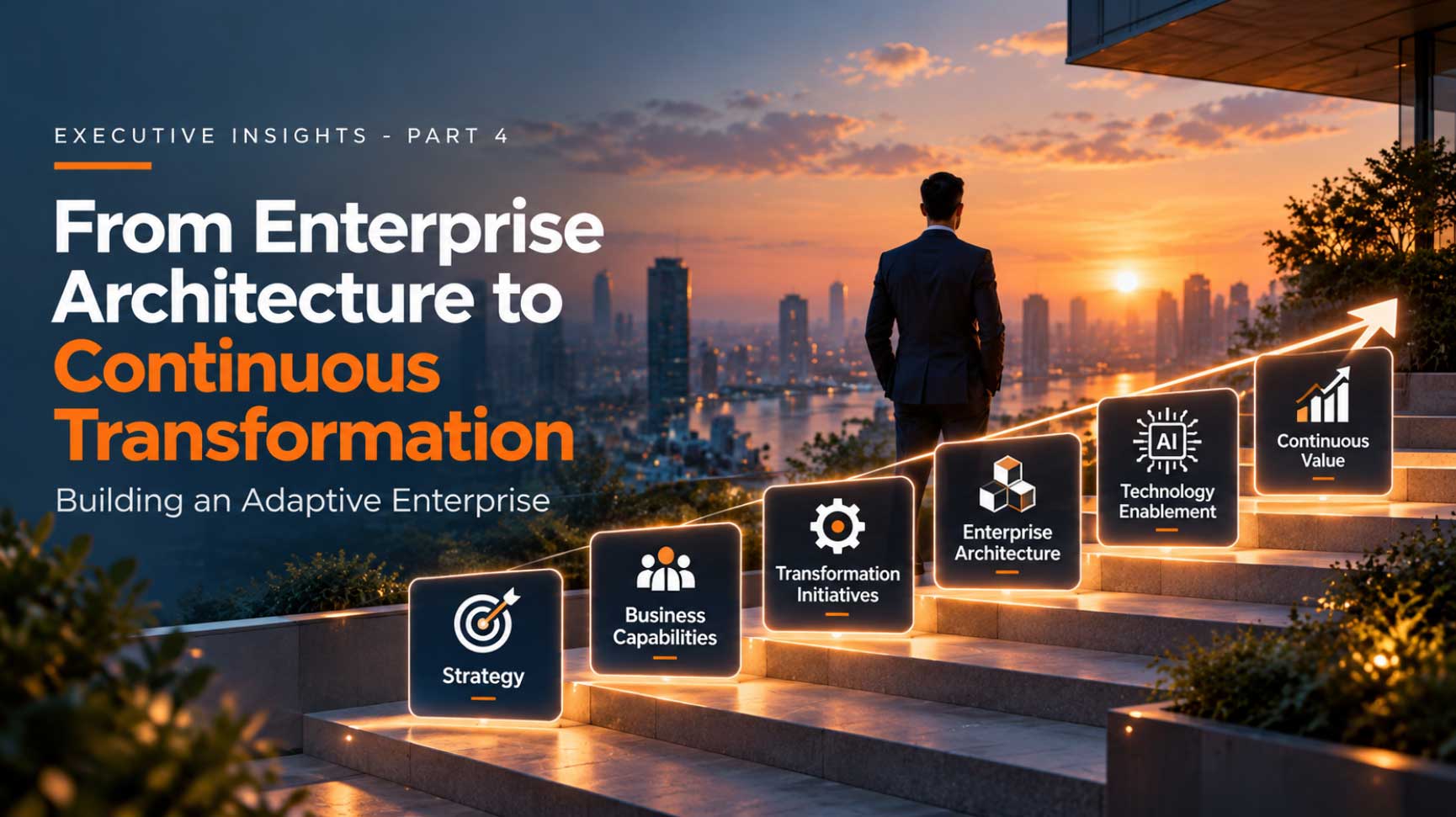
In Part 4, we explored how these connections can support continuous transformation and help organizations become more adaptive.
The next step is to make the value of transformation visible, measurable, and actionable.
Transformation should be measured by the business outcomes it enables, not simply by the technology it delivers.
Most organizations already measure project delivery.
They track budgets, deadlines, implementation milestones, resource utilization, and technical performance.
These indicators are useful. They help determine whether initiatives are progressing as planned.
However, they do not necessarily explain whether an initiative is improving the business.
Consider an organization that implements a new customer relationship management platform.
The project may be completed on time, within budget, and according to its technical requirements.
But several important questions remain:
Without answering these questions, the organization can demonstrate successful implementation but may struggle to demonstrate business value.
The same challenge applies to AI adoption, application modernization, cloud migration, and process automation.
The gap between delivery and outcomes
Transformation initiatives are often measured through activities and outputs rather than outcomes.
Activities describe the work performed, such as implementing a platform or redesigning a process.
Outputs describe what was delivered, such as a new application, automated workflow, or integrated data platform.
Outcomes describe what changed for the business, such as reduced processing time, improved service quality, or increased operational resilience.
Business value describes the contribution those outcomes make to strategic objectives, financial performance, customer experience, or organizational effectiveness.
These distinctions matter because an initiative can deliver its intended output without achieving its expected outcome.
A stronger measurement approach connects all four levels.
Transformation measurement should begin before implementation.
Organizations need to define what they want to achieve and how they will determine whether the expected benefits have been realized.
This requires a clear connection between strategic objectives and transformation investments.
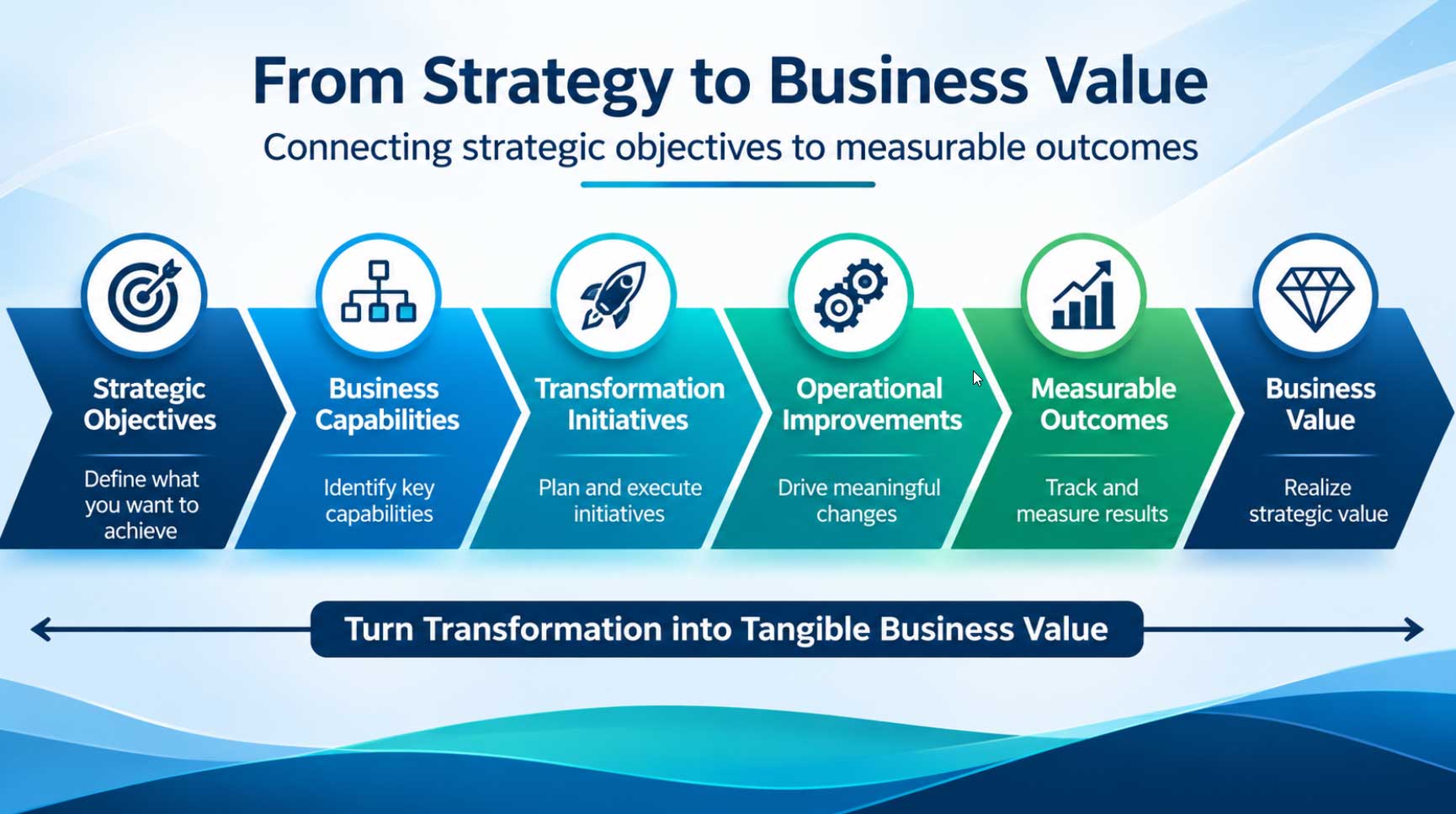
A practical measurement model follows this structure:
Strategic Objectives → Business Capabilities → Transformation Initiatives → Operational Improvements → Measurable Outcomes → Business Value
Each element serves a different purpose.
Strategic objectives
Define what the organization wants to achieve.
Examples include improving customer experience, increasing operational efficiency, strengthening resilience, or entering new markets.
Business capabilities
Identify what the organization must be able to do to achieve those objectives.
Examples include customer management, service delivery, financial management, data analytics, and supplier management.
Transformation initiatives
Describe the changes required to improve those capabilities.
These may involve process redesign, application modernization, AI adoption, data improvements, or organizational change.
Operational improvements
Identify the expected changes in how the organization operates.
Examples include faster processing, fewer manual activities, improved information quality, and better coordination.
Measurable outcomes
Establish evidence that the improvements are occurring.
Examples include shorter process cycle times, lower error rates, increased service availability, or improved customer satisfaction.
Business value
Evaluate how these outcomes contribute to the organization’s strategic priorities.
By connecting these elements, organizations can create a clearer line of sight from transformation investments to business results.
This allows leadership to assess whether resources are being directed toward the changes that matter most.
Business capabilities provide a useful foundation for evaluating transformation because they describe what an organization needs to be able to do, independently of its organizational structure or specific technology solutions.
A capability based approach allows organizations to assess performance before and after transformation.
For example, an organization may identify customer service management as a strategically important capability.
A capability assessment might reveal challenges related to fragmented customer information, manual workflows, or inconsistent service processes.
The organization could respond by introducing an integrated platform, improving data governance, and automating selected activities.
Rather than measuring only whether these solutions were implemented, it should evaluate whether the underlying capability improved.
Capability performance can be assessed through:
Effectiveness
How well does the capability achieve its intended business purpose?
Efficiency
How effectively does the organization use resources to deliver the capability?
Maturity
How consistently and reliably is the capability performed and managed?
Risk and resilience
How well can the capability withstand disruptions, security incidents, and operational changes?
Strategic contribution
How strongly does the capability support the organization’s business objectives?
A capability assessment can establish a baseline before transformation begins.
Subsequent assessments can then identify improvements, remaining gaps, and areas requiring further investment.
This provides a more meaningful view of transformation progress than technology implementation status alone.
The value of transformation becomes clearer when organizations can demonstrate how their business capabilities have improved.
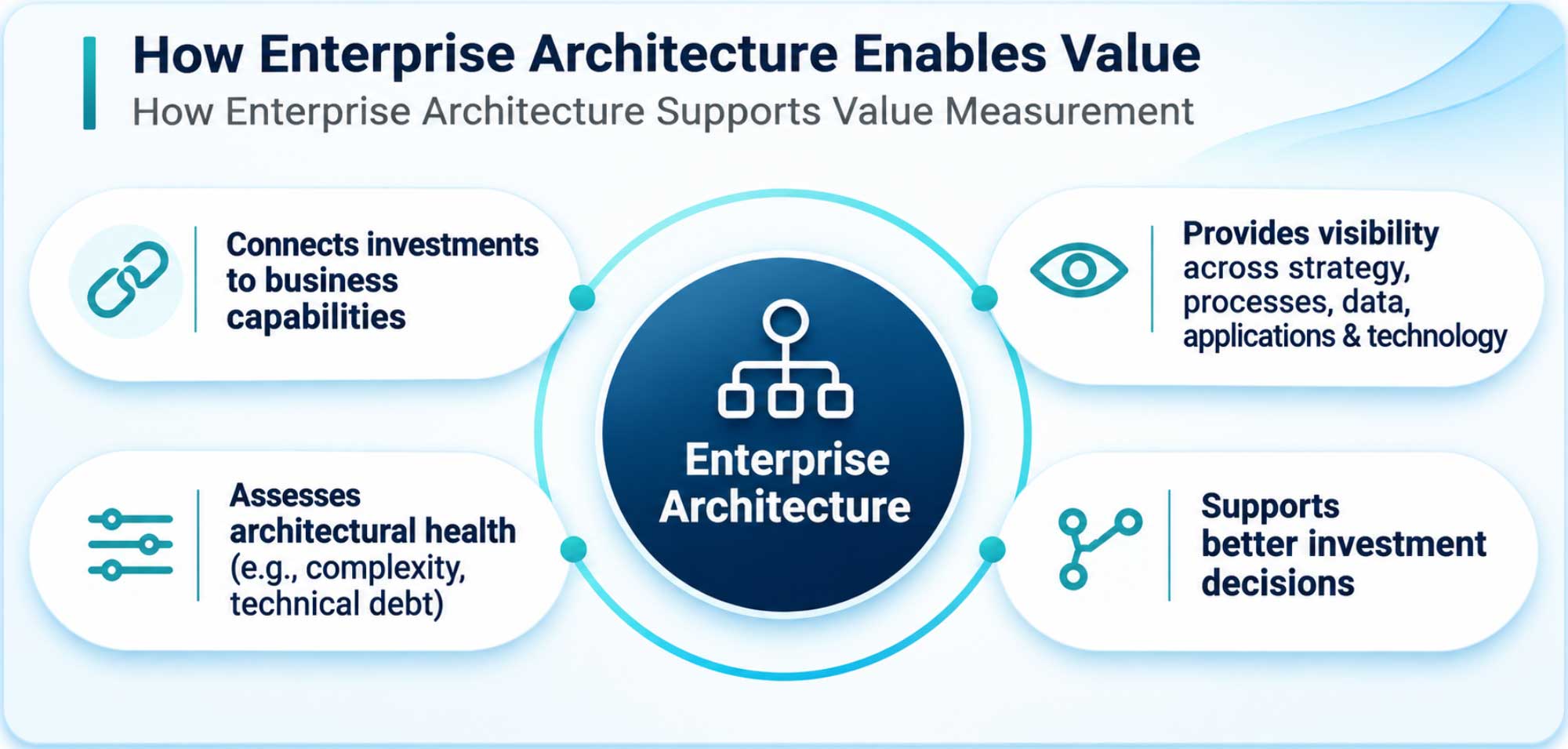
Enterprise Architecture connects business strategy with the processes, information, applications, and technology required to execute it.
This connected view is valuable when measuring transformation because business outcomes rarely depend on a single technology component.
For example, improving customer service may require changes across several areas:
Enterprise Architecture helps organizations understand these relationships.
It can also provide traceability between transformation initiatives and the business capabilities they are expected to improve.
Enterprise Architecture supports value measurement in four ways.
1. Establishing visibility
Architecture models provide an overview of the organizational components involved in delivering business outcomes.
2. Connecting investments to capabilities
Transformation initiatives can be linked to the capabilities, processes, applications, and technology they affect.
3. Supporting impact analysis
Organizations can evaluate how proposed changes may influence performance, dependencies, costs, and risks.
4. Monitoring architectural improvement
Architecture information can help identify reductions in application redundancy, technical debt, integration complexity, and technology risk.
For example, application portfolio management can reveal whether modernization initiatives are reducing unnecessary applications and improving technology sustainability.
However, architectural improvements should also be connected to their business effects.
Reducing the number of applications is not automatically valuable if the change reduces service quality or introduces operational constraints.
The objective is to understand how architectural decisions contribute to measurable business improvements.
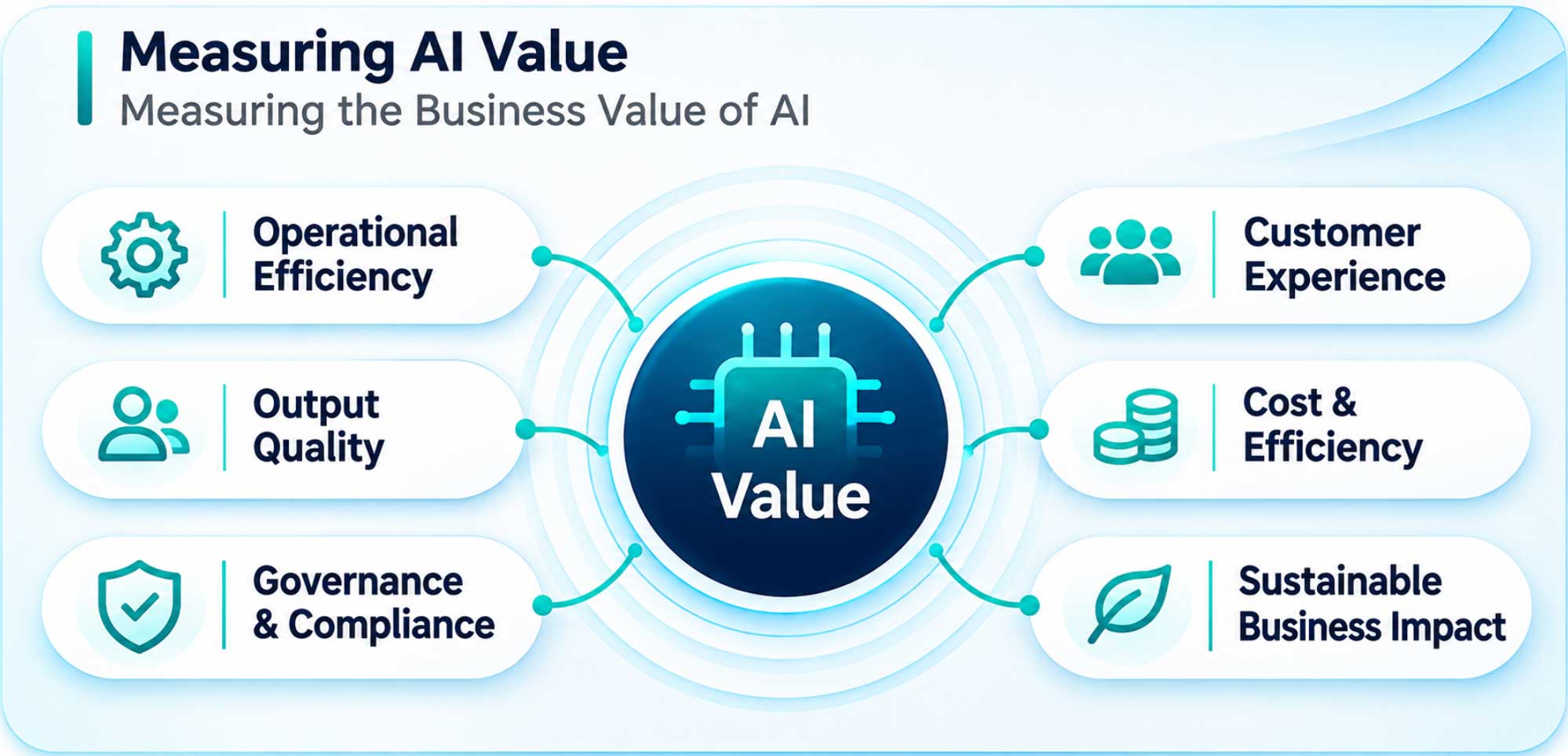
Artificial intelligence introduces additional challenges to transformation measurement.
AI solutions may improve productivity, support decision-making, automate activities, or enable new services.
However, measuring AI success only through model accuracy, usage statistics, or deployment status provides an incomplete picture.
Organizations need to evaluate whether AI is delivering the intended business outcomes while remaining reliable, secure, and appropriately governed.
Five dimensions of AI value measurement
Business relevance
Does the AI solution address a clearly defined business need?
Operational performance
Has the solution improved processing time, productivity, service quality, or decision-making?
Data and output quality
Are the information sources and AI-generated outputs sufficiently reliable for their intended purpose?
Risk and governance
Are privacy, security, accountability, regulatory, and operational risks appropriately managed?
Value realization
Do the benefits justify the financial, technical, operational, and governance costs?
Example: AI-assisted customer support
Consider an organization implementing an AI assistant to support customer service employees.
Technical measures might include response latency, system availability, and the quality of AI-generated recommendations.
But business-focused measurement should also consider:
An AI solution that produces faster responses but increases errors or creates additional compliance risks may not deliver the expected net value.
This is why AI performance measurement must remain connected to business objectives and governance requirements.
AI success should be evaluated through the business improvements it enables and the risks and costs required to sustain those improvements.
Organizations often approve transformation investments based on expected benefits.
Business cases may include projected cost savings, productivity improvements, increased revenue, or reduced operational risks.
However, these benefits are not always systematically monitored after implementation.
A value realization approach helps close this gap.
It connects investment decisions with measurable outcomes and assigns responsibility for monitoring results.
A practical value realization process
Define expected benefits
Identify the business improvements an initiative is intended to deliver.
Establish a baseline
Measure the current performance of the affected business capabilities or processes.
Set targets
Define realistic, measurable outcomes and expected timeframes.
Assign ownership
Identify who is accountable for delivering and monitoring the expected benefits.
Track performance
Collect relevant data during implementation and after the solution becomes operational.
Evaluate realized value
Compare actual outcomes against the original targets and investment assumptions.
Adjust where necessary
Use the results to improve processes, refine technology solutions, or reconsider investment priorities.
This approach supports stronger accountability and enables leadership to make more informed portfolio decisions.
It also recognizes that some benefits emerge gradually.
For example, implementing a new enterprise platform may initially increase costs because of migration, training, and organizational change.
Operational improvements may only become visible after processes stabilize and employees adopt the new solution.
Value realization therefore requires measurement over an appropriate period rather than relying solely on results at project closure.
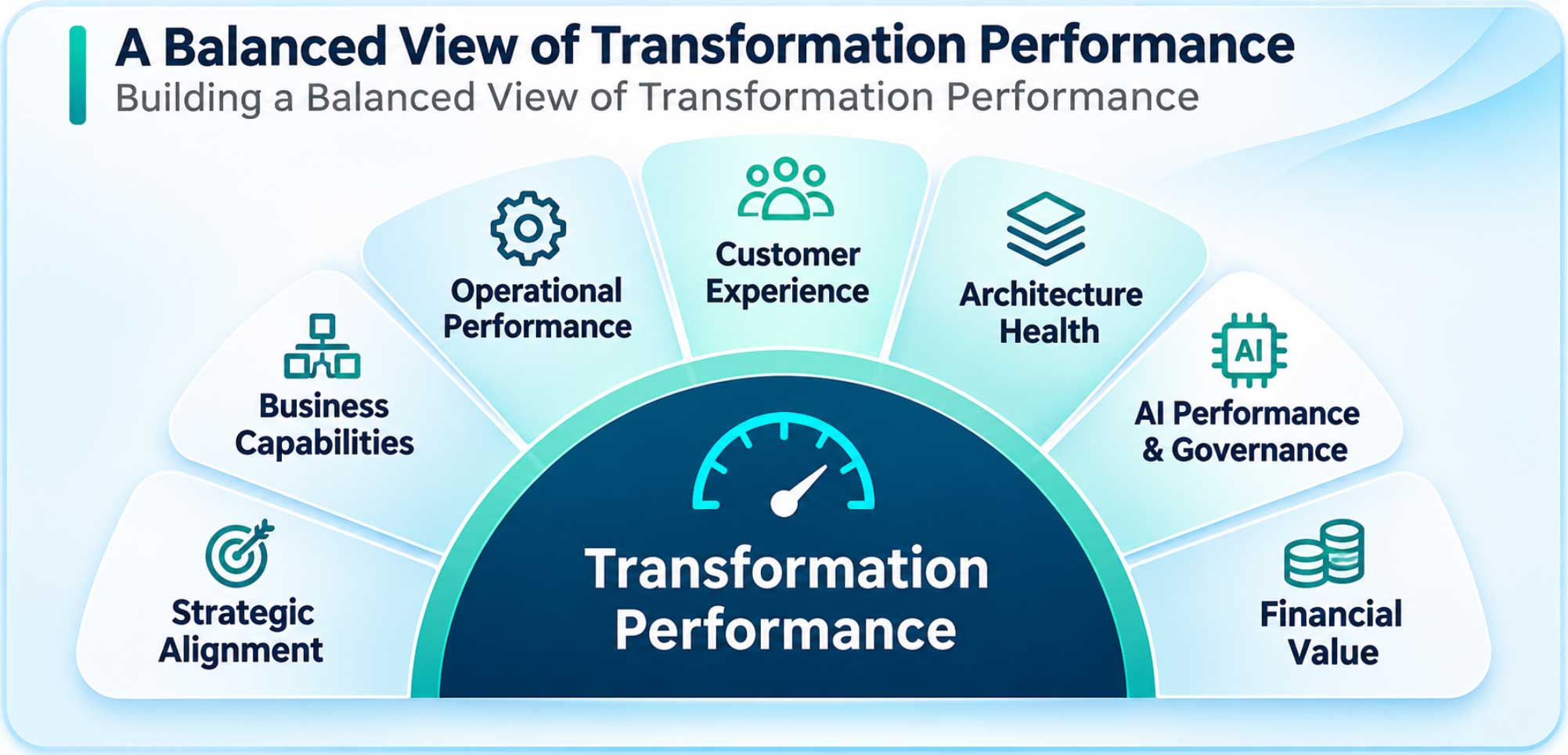
No single metric can fully describe transformation success.
Financial indicators are useful, but they may not capture improvements in resilience, information quality, customer experience, or organizational capability.
Similarly, operational performance indicators may show local improvements without demonstrating broader strategic value.
A balanced measurement framework should reflect the organization’s priorities and transformation objectives.
The following table provides examples of measurement areas and possible indicators.
Measurement area | Example indicators | What it helps evaluate |
Strategic alignment | Initiatives linked to strategic objectives | Whether investments support business priorities |
Business capabilities | Capability maturity, performance, identified gaps | Whether the organization is improving its ability to deliver value |
Operational efficiency | Process cycle time, error rates, cost per transaction | Whether business operations are becoming more effective |
Customer experience | Satisfaction, service quality, resolution time | Whether transformation improves customer outcomes |
Enterprise Architecture | Application redundancy, technical debt, integration complexity | Whether the architecture is becoming more sustainable |
AI performance | Output quality, productivity improvement, human intervention rates | Whether AI is delivering reliable operational benefits |
Financial value | Realized savings, total cost of ownership, return on investment | Whether benefits justify investment costs |
Risk and compliance | Control effectiveness, unresolved risks, compliance findings | Whether transformation remains appropriately governed |
Organizational adoption | User adoption, process compliance, training effectiveness | Whether new capabilities are being used successfully |
Measurement is only useful when results can be interpreted.
For example, reporting that a business process now takes four hours does not demonstrate improvement unless the organization understands its previous performance and desired target.
A meaningful measurement approach should establish three elements.
Baseline: Where are we today?
The baseline describes current performance before transformation.
It may include process efficiency, operational costs, service quality, capability maturity, or risk exposure.
Target: What improvement do we expect?
The target defines the intended result.
Targets should be realistic, measurable, and connected to strategic priorities.
Actual result: What has changed?
Actual performance is compared with the baseline and target to assess progress.
For example:
Indicator | Baseline | Target | Actual |
Average process completion time | 10 hours | 6 hours | 5.5 hours |
Manual processing error rate | 8% | 3% | 2.5% |
Application availability | 97% | 99.5% | 99.7% |
Customer satisfaction score | 72/100 | 85/100 | 82/100 |
Illustrative example only; these figures do not represent Bizcon or customer results.
This type of reporting makes improvements easier to understand.
However, measurement should also consider external influences.
A performance improvement may result from several factors, including organizational changes, demand fluctuations, process redesign, or technology investments.
Organizations should therefore avoid automatically attributing every improvement to a single transformation initiative.
Clear ownership is equally important.
Business owners should remain accountable for the outcomes associated with their capabilities and processes, while technology and architecture teams provide the information needed to evaluate technical and structural improvements.
Transformation measurement should not be a separate reporting exercise performed only after implementation.
It should be integrated into the governance and decision-making processes used throughout the transformation lifecycle.
In Part 4, we introduced a continuous transformation model:
Understand → Assess → Prioritize → Design → Execute → Measure & Adapt
Value measurement supports every stage of this cycle.
Understand
Establish the current business context, strategic objectives, capability performance, and existing challenges.
Assess
Identify improvement opportunities and evaluate their expected business impact.
Prioritize
Compare initiatives based on expected value, strategic relevance, risks, dependencies, and resource requirements.
Design
Define the required changes and establish measurable outcomes, baselines, targets, and ownership.
Execute
Implement transformation initiatives while monitoring delivery progress, adoption, risks, and early performance indicators.
Measure & Adapt
Evaluate realized outcomes, compare results with expectations, and use the findings to refine future priorities.
This creates a continuous feedback mechanism.
The results of completed and ongoing initiatives inform the next round of transformation decisions.
Rather than relying only on assumptions made during initial planning, organizations can use evidence from actual performance.
Continuous transformation becomes more effective when investment decisions are informed by measured outcomes and lessons from previous changes.
Transformation portfolios often contain initiatives with different objectives, timescales, costs, and levels of complexity.
This makes it difficult for leadership to obtain a consistent view of progress and value.
A connected transformation dashboard can help consolidate relevant information.
Rather than focusing exclusively on project status, it should present a balanced view of delivery, business outcomes, architecture, investment, and risk.
A leadership dashboard could include:
Strategic alignment
Which initiatives support the organization’s highest-priority objectives?
Capability improvement
Which business capabilities are improving, and where do significant gaps remain?
Portfolio performance
Which initiatives are progressing as planned, and which require management attention?
Investment value
Are expected financial and operational benefits being realized?
Architecture health
Are technical debt, redundancy, and critical dependencies being reduced or managed?
Risk and governance
Are transformation initiatives operating within acceptable risk and compliance requirements?
Future priorities
What do current performance results suggest about the next investment decisions?
The dashboard should enable decisions rather than simply display information.
For example, leadership should be able to identify initiatives that consume significant resources but show limited progress toward expected business outcomes.
They should also be able to recognise capability improvements that create opportunities for further innovation.
Enterprise Architecture can contribute by maintaining traceability between strategy, capabilities, initiatives, technology components, and outcomes.
This allows leaders to explore the relationships behind performance indicators rather than viewing each metric in isolation.
Even organizations with established reporting practices can struggle to measure transformation value consistently.
Several recurring issues deserve attention.
Measuring activity instead of outcomes
Counting completed projects, deployed applications, or automated processes does not necessarily demonstrate business improvement.
Measures should reflect the intended changes in capability performance and business results.
Defining benefits too late
When success criteria are established after implementation, it becomes difficult to determine whether the original objectives were achieved.
Expected benefits should be defined during investment planning.
Using too many indicators
Large dashboards can obscure the information leadership needs.
Measurement should focus on a manageable set of indicators linked to strategic decisions.
Ignoring organizational adoption
A technically successful solution may deliver limited value if employees do not use it effectively.
Adoption, process changes, and organizational readiness should be considered.
Overlooking ongoing costs and risks
Expected benefits should be evaluated alongside maintenance costs, licensing, security, compliance, operational dependencies, and other relevant obligations.
Failing to act on measurement results
Performance reporting creates limited value if findings do not influence future decisions.
Organizations need a mechanism for reviewing results, assigning corrective actions, and updating transformation priorities.
The purpose of measurement is not to produce more reports. It is to improve the quality of transformation decisions.
At Bizcon, we see Business Architecture and Enterprise Architecture as valuable disciplines for strengthening the connection between strategy, transformation investments, and business outcomes.
When these disciplines are connected, organizations can establish clearer traceability from strategic priorities to transformation activities and expected results.
This supports more informed decisions about where to invest, what to modernize, which capabilities to improve, and how to evaluate success.
The objective is not simply to demonstrate that architecture and technology activities have been completed.
It is to understand how those activities contribute to stronger business capabilities, better decisions, and measurable organizational value.
This means regularly reviewing whether business capabilities remain effective, whether technology investments continue to support strategic priorities, and whether new improvement opportunities have emerged.
It also means recognizing when an investment is no longer delivering sufficient value.
Continuous value management helps organizations make better decisions about improving, expanding, consolidating, replacing, or retiring existing solutions.
The result is a more adaptive enterprise in which transformation is continuously evaluated against business needs and measurable outcomes.
Across this five part Executive Insights series, we have explored how organizations can connect business strategy, Enterprise Architecture, AI, governance, and transformation execution.
Part 1 – Turning AI Ambition into Execution
Explored why successful AI transformation requires alignment between business objectives, people, processes, data, architecture, and technology.
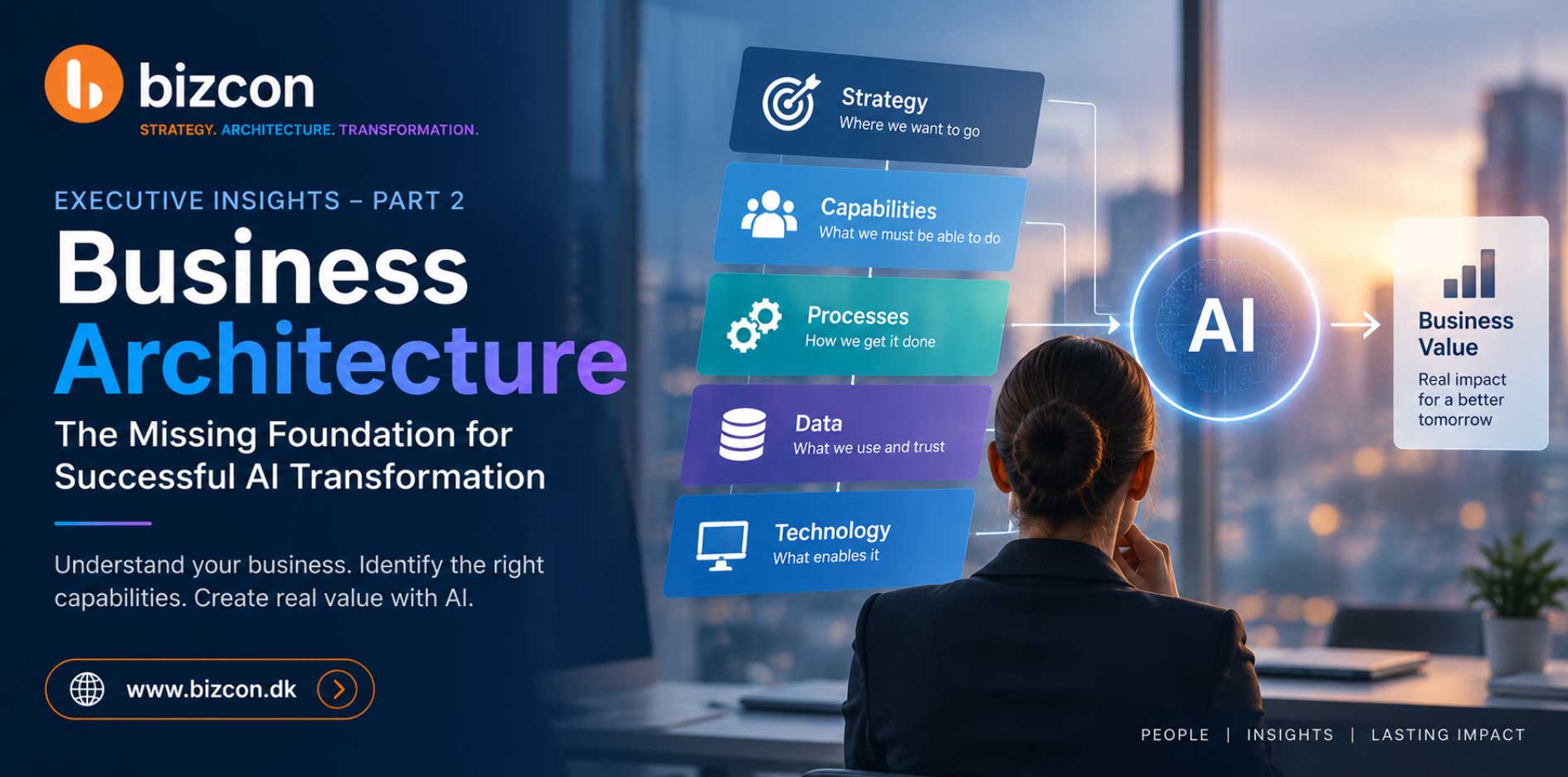
Part 2 – Business Architecture: The Missing Foundation for Successful AI Transformation
Examined how business capabilities and value streams provide the context needed to identify meaningful AI and digital transformation opportunities.
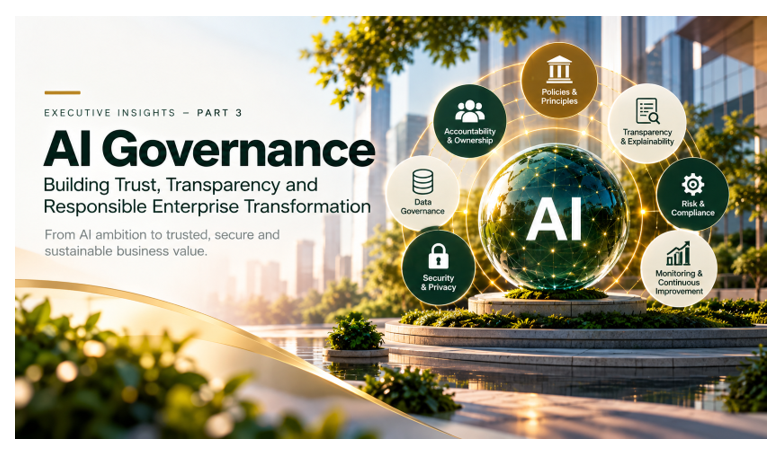
Part 3 – AI Governance: Building Trust, Transparency, and Responsible Enterprise Transformation
Focused on visibility, accountability, risk management, data governance, and the controls required for responsible AI adoption.
Part 4 – From Enterprise Architecture to Continuous Transformation: Building an Adaptive Enterprise
Explored how connected architecture, capability planning, adaptive roadmaps, and transformation governance can help organizations respond to change.
Part 5 – Measuring Transformation Success: Turning Architecture, AI, and Digital Investments into Business Value
Brings these perspectives together by examining how organizations can measure whether transformation is delivering its intended business outcomes.
The measure of successful transformation is not how much technology an organization implements, but how effectively it improves its ability to deliver business value.
From strategic ambition to measurable business value.
By connecting Business Architecture, Enterprise Architecture, AI Governance, transformation portfolios, and performance measurement, organizations can establish a clearer foundation for informed investment decisions and continuous improvement.
Connecting business strategy, Enterprise Architecture, and transformation execution.